
5. The Bowling Pinsetter: Waiting at the Business End of the Lane
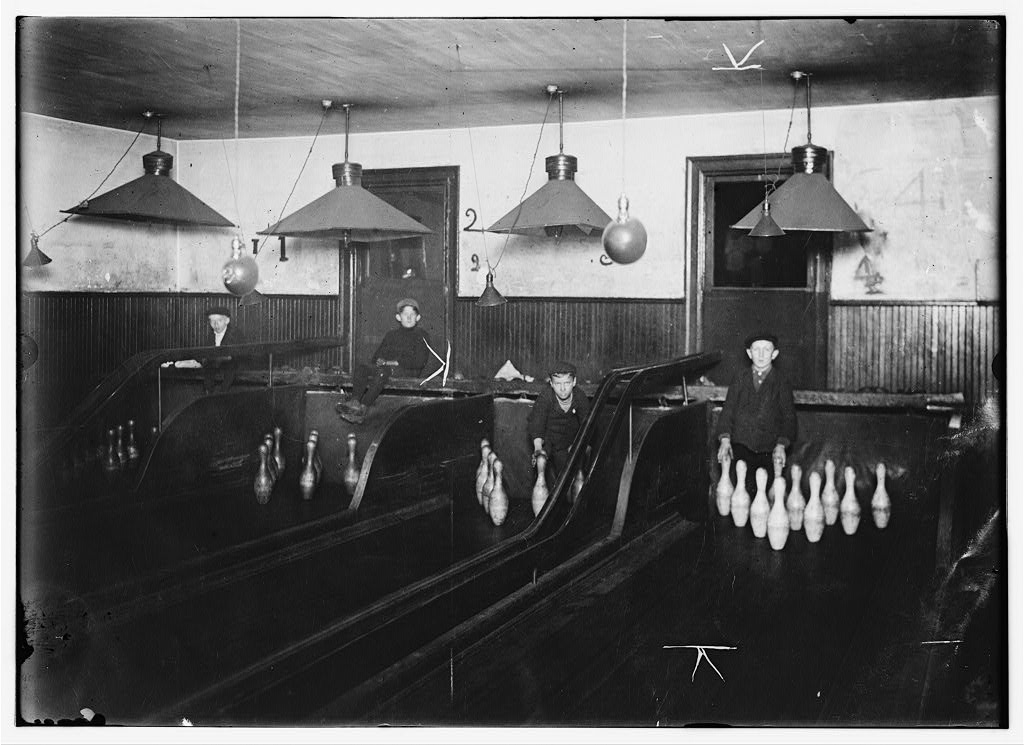
After the crash of a bowling ball came another round of work. Before fully automatic pinsetters, people cleared fallen pins, reset them and returned balls. Many were boys, working behind the lanes while customers enjoyed their games.
Lewis Hine’s photographs for the National Child Labor Committee documented young bowling-alley workers in the early twentieth century. His captions repeatedly noted late working hours. Those images give an ordinary leisure activity a different perspective: somebody else’s evening entertainment could mean a child’s long shift.
The change to machinery took time. Some equipment still required workers to operate it by hand. AMF demonstrated an automatic pinspotter in 1946, but the Smithsonian dates its readiness for wider acceptance to 1952. The machine had to do more than stand ten pins upright. It needed to preserve pins left standing, clear the fallen ones and keep play moving. A task that seems simple from the bowler’s end was an intricate job to automate.








Add Comment