
4. The Telephone Operator: The Person Who Connected Your Call
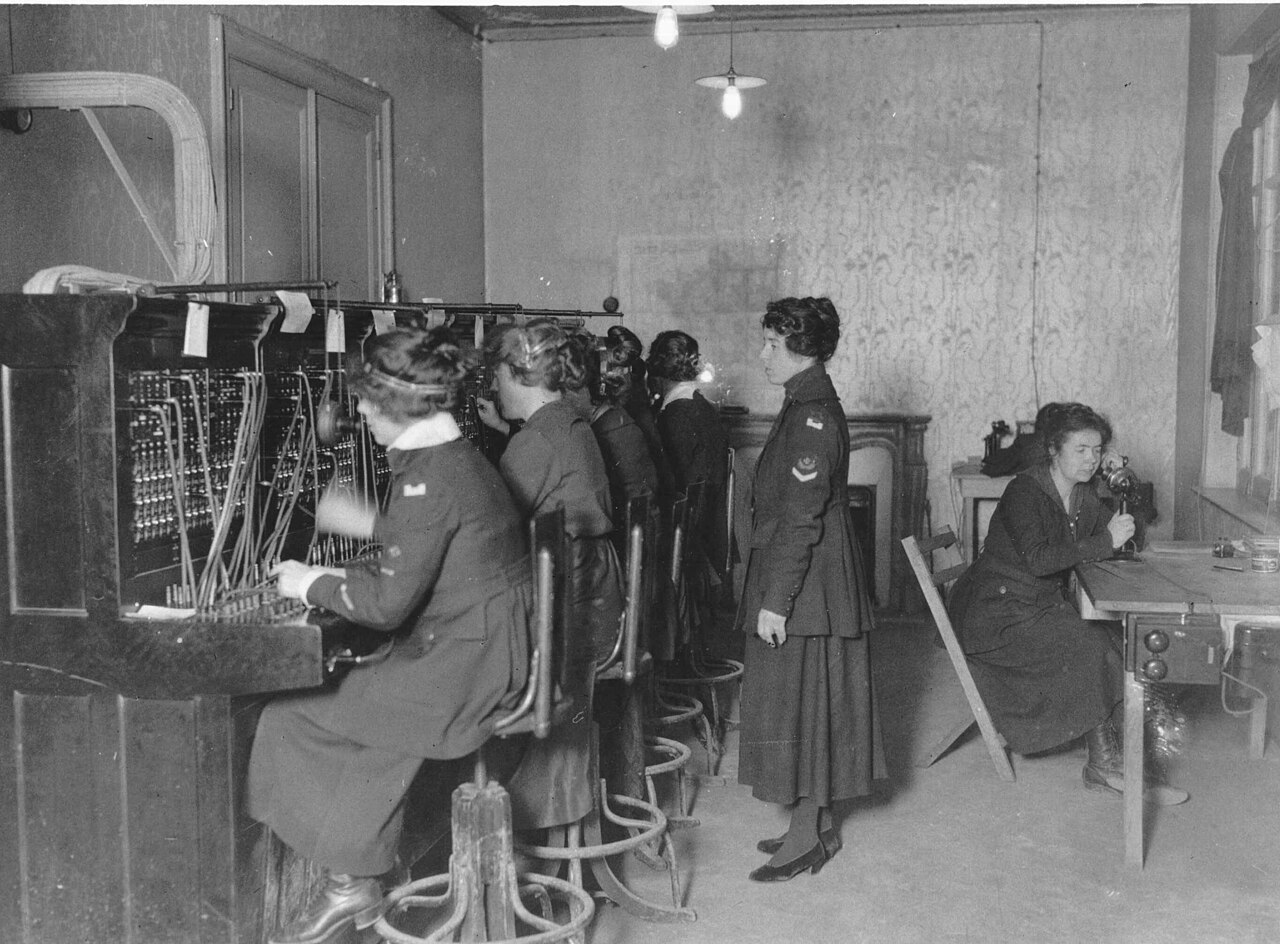
For many early telephone users, making a call meant asking another person to connect it. At a manual exchange, operators handled the connections that allowed voices to travel between subscribers. The network had a human working at its center.
The job required concentration and coordination. Operators worked with switchboards, plugs and cords, managing calls while speaking clearly to customers. Women became a major part of this workforce. Their work was skilled technical labor even when the public mainly encountered a courteous voice asking which number was wanted.
Automation arrived gradually. The Science Museum notes that Strowger’s automatic exchange system was patented in 1891, yet Britain’s last manual telephone exchange remained in operation until 1976. That long overlap is more revealing than a single invention date. A new machine could exist for decades while people, buildings and local networks continued to rely on older equipment. The operator’s disappearance from an ordinary call was a lengthy transition.








Add Comment