
10. The Rosetta Stone
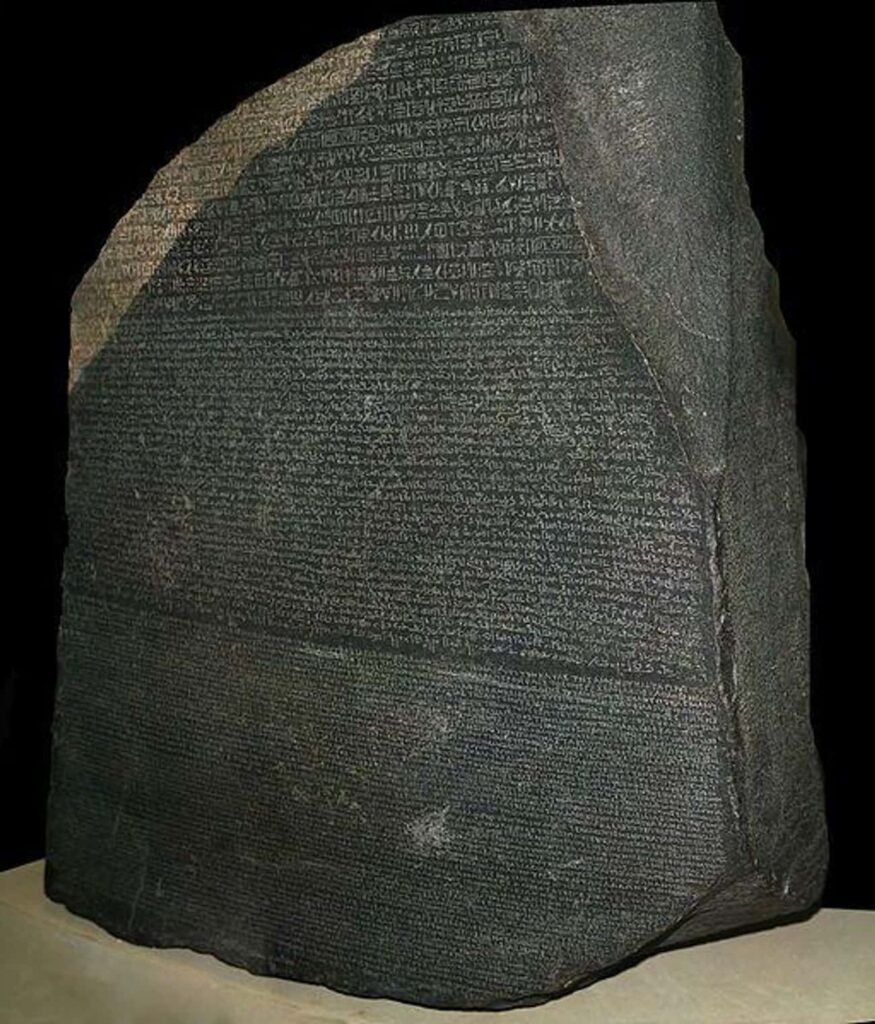
When you hear the words “Rosetta Stone,” you may think of that language-learning program designed to help you pick up a new tongue with ease. That tool derives its name from the real Rosetta Stone, which is currently on display at the British Museum.
Discovered by French soldiers in Egypt in 1799, the Rosetta Stone contains ancient writing in three scripts. A large, black, basalt slab, the Rosetta Stone features the same passage written three times: once in Greek, once in Egyptian hieroglyphics, and once in Egyptian demotic.
Once linguists were able to correlate the meanings of words in readable Greek, the Rosetta Stone opened up possibilities for the translation of Egyptian hieroglyphics.








Add Comment