
9. Dunce Caps
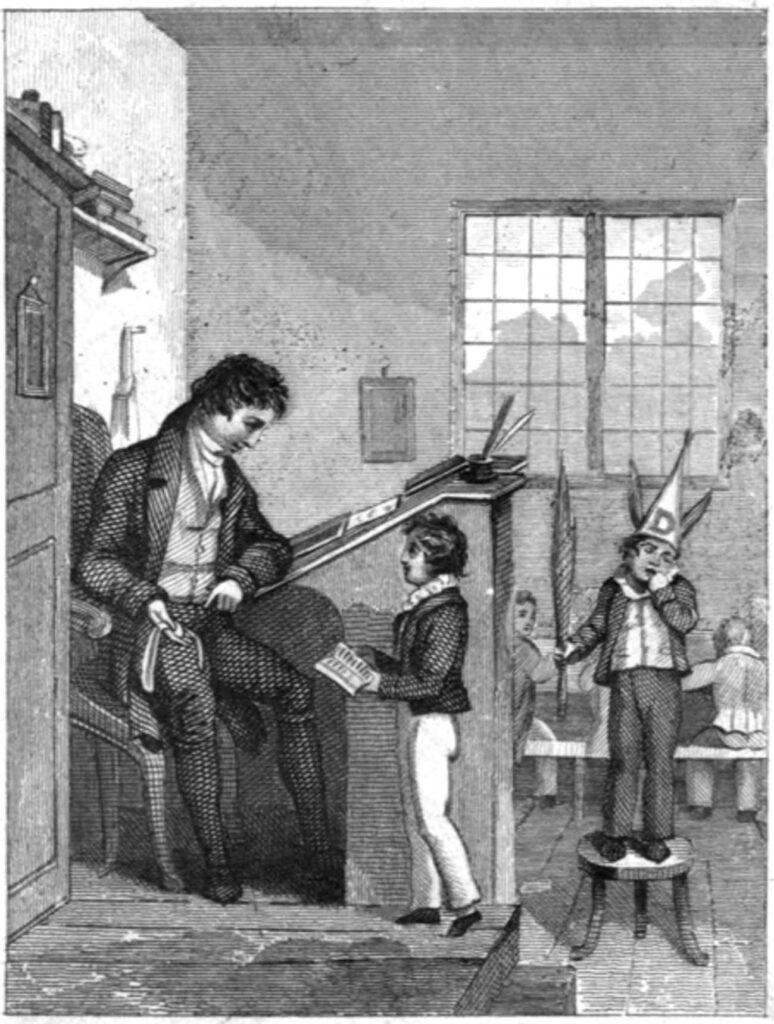
Crafted into a cone shape and labeled with a “D” or the word “dunce,” dunce caps were used to set apart class clowns and less-than-stellar students in a classroom. The origins of the dunce cap, however, are in direct opposition to how the head-toppers came to be worn from the 16th century forward.
Medieval philosopher and theologian John Duns Scotus believed conical hats could function as a funnel of sorts, attracting knowledge into the tip and spreading to the wearer’s brain. Cone-shaped headgear indicated wisdom until Scotus himself became the enemy of religious thought. His name – Duns (from the town in Scotland where he was born) – became a term for ignorance, and eventually evolved into the word “dunce.”
During the Victorian era, and well into the 20th century, dunce caps were placed atop the heads of young children as they sat on stools in the corner of a classroom, cast off as troublemakers or slow learners. The fear and intimidation of a dunce cap was also a way to keep students in line.








Add Comment