
3. The Ice Harvester: Saving Winter for the Rest of the Year
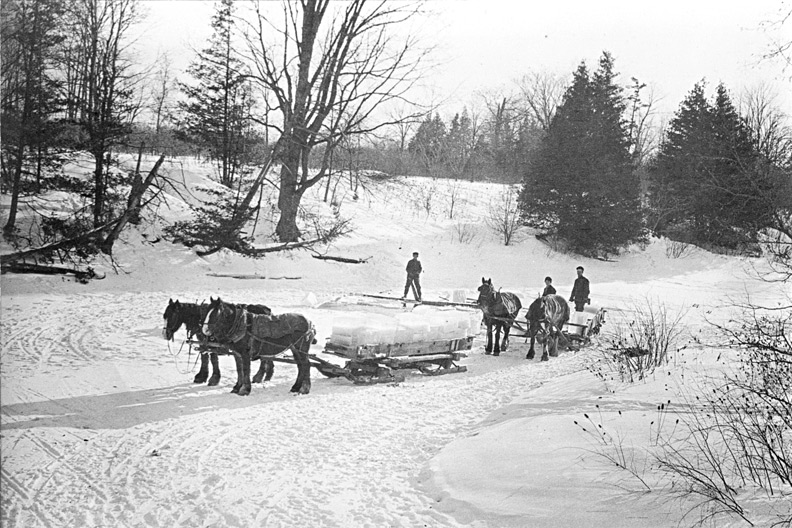
Before mechanical refrigeration became widespread, winter itself could be a commercial resource. Crews cut natural ice from frozen waterways, stored it and supplied customers who needed cooling long after the weather had warmed.
The work was carefully organized. Workers cleared snow, marked a grid and cut blocks free. Horse-drawn equipment could score the surface, while saws and bars finished the cuts. Blocks were floated along cleared channels, hauled up chutes and packed into icehouses. Sawdust helped insulate the stored ice, turning a seasonal harvest into a supply that could last beyond winter.
This was a whole chain of labor, not simply someone breaking a little ice from a pond. The Illinois State Museum describes harvest crews ranging from twenty to a hundred men. Their work supported households, businesses and shipments traveling long distances by rail. A modern refrigerator hides its cooling machinery inside a cabinet; the older system depended on frozen water, storage buildings and coordinated human effort.








Add Comment