
2. The Lamplighter: Switching on the City, One Flame at a Time
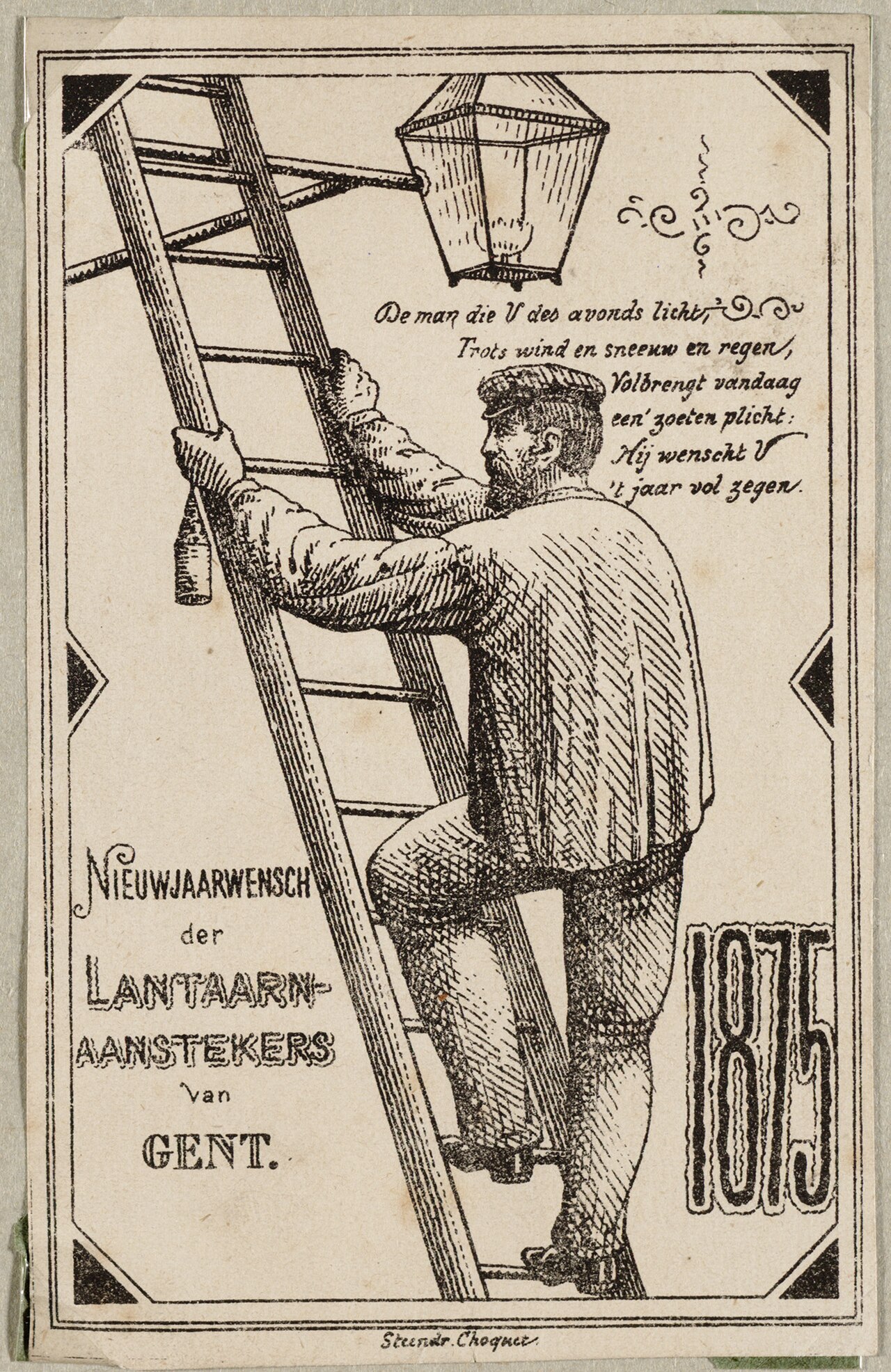
A street did not always become bright because someone flipped a switch. Lamplighters made their rounds lighting individual lamps, helping turn dark roads into places where people could shop, socialize and find their way home.
The details changed with the technology. Oil lamps needed tending, while gas lamps drew fuel from pipes supplied by gasworks. In London, public gas lighting appeared on Pall Mall in 1807. Lamplighters used long poles to reach the fittings above the street, making a repeated circuit of tasks that an electric lighting system would eventually absorb.
That familiar figure with a pole belonged to a much larger industrial network. Coal had to be extracted, gas manufactured and pipes maintained before a flame could burn at the corner. The occupation has also changed rather than disappearing completely: surviving historic gas lamps still require maintenance. Their modern caretakers service mechanisms and fittings, while timers can perform the daily switching that once required a visit.








Add Comment