
10. The Crossing Sweeper: A Cleaner Path for a Small Payment
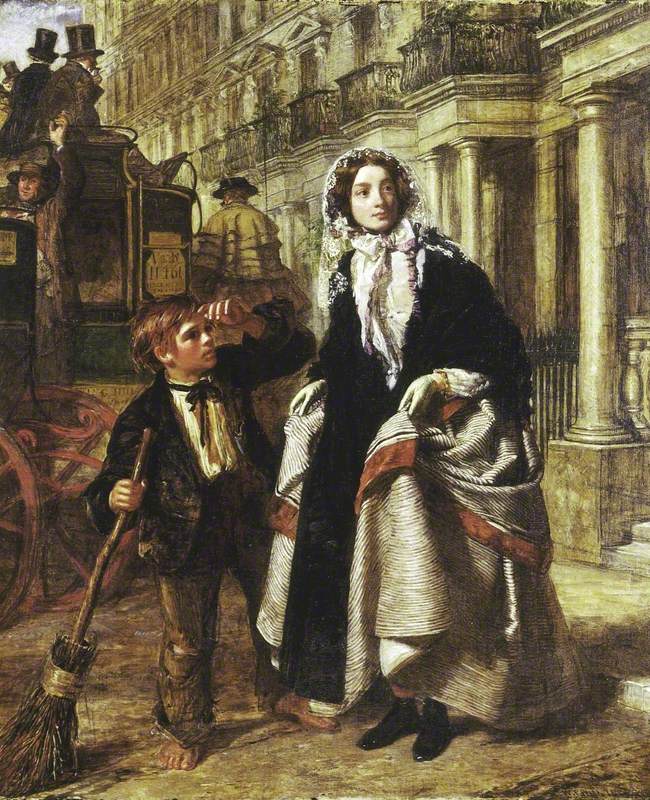
Crossing a dirty street could once involve an informal transaction. A crossing sweeper cleared a path through mud and street debris, hoping pedestrians would pay a small gratuity for cleaner shoes and clothing.
In nineteenth-century London, this work offered a precarious income to people with few alternatives. Adults might have a regular spot, while children could move between locations. Journalists, artists and novelists made the sweeper a familiar figure, but their depictions also carried assumptions about poverty, respectability and who deserved help.
The boundary between paid service and begging was contested. An 1888 parliamentary question challenged police action against two crossing sweepers, reporting that a magistrate had regarded the work as a legitimate way to earn a living. The painting shown here is an artist’s interpretation, not a candid record of a specific exchange. Behind the familiar broom was a serious question: when a person’s livelihood depended on voluntary payments, who decided whether that person was working?











Add Comment