
Mystery 8 of 15
8. Can Anyone Read the Phaistos Disc?
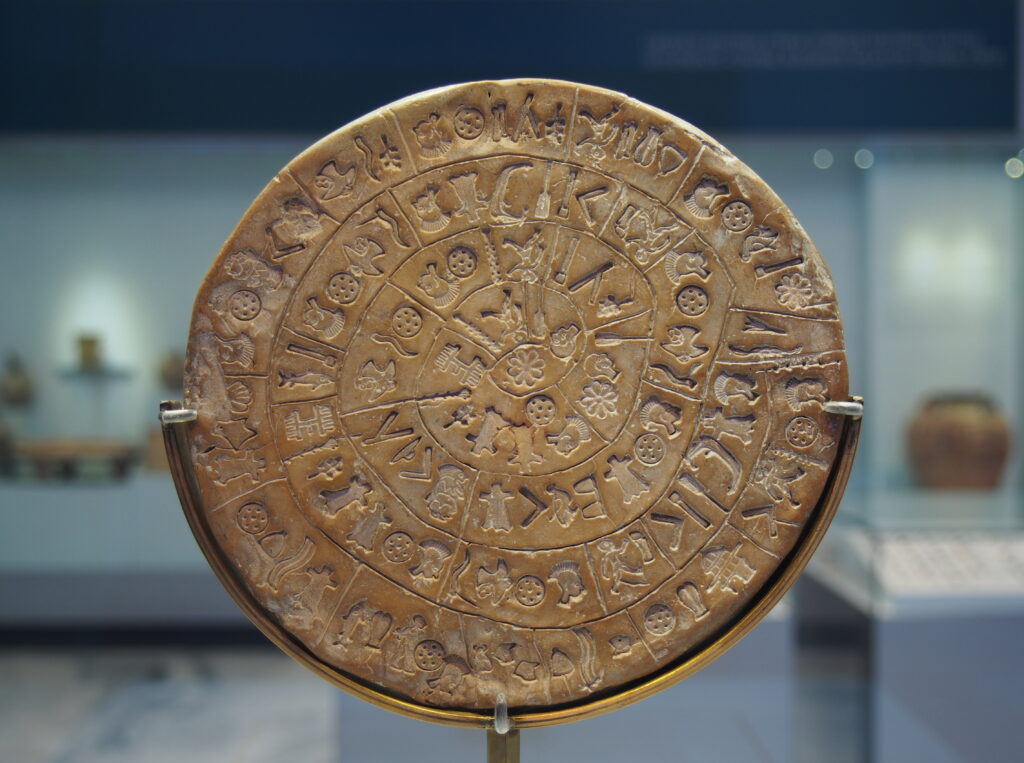
In 1908, archaeologist Luigi Pernier discovered a clay disc while excavating the ancient Minoan site of Phaistos on Crete.
The object was extraordinary.
Both sides contain symbols arranged in a spiral. Rather than being drawn by hand, the individual signs appear to have been impressed into the wet clay using stamps before the disc was fired.
There are 241 individual sign occurrences representing 45 different symbols. They depict objects and figures including human heads, plants, animals, tools, and other shapes.
Scholars have spent more than a century trying to work out what they mean.
Proposed translations have identified the disc as a prayer, hymn, military message, calendar, legal document, game, inventory, and nearly everything in between.
Why It Is Still a Mystery
The biggest problem is the object’s uniqueness. A decipherment normally becomes convincing when researchers can test it against many different texts. With the Phaistos Disc, there simply is not enough material.
Even if someone guessed the correct language and correctly interpreted several symbols, proving it would be exceptionally difficult. Until another substantial example of the same writing system appears, the disc may remain unreadable.











Add Comment