
9. The Fuentidueña Apse: Thousands of Stones on Long-Term Loan
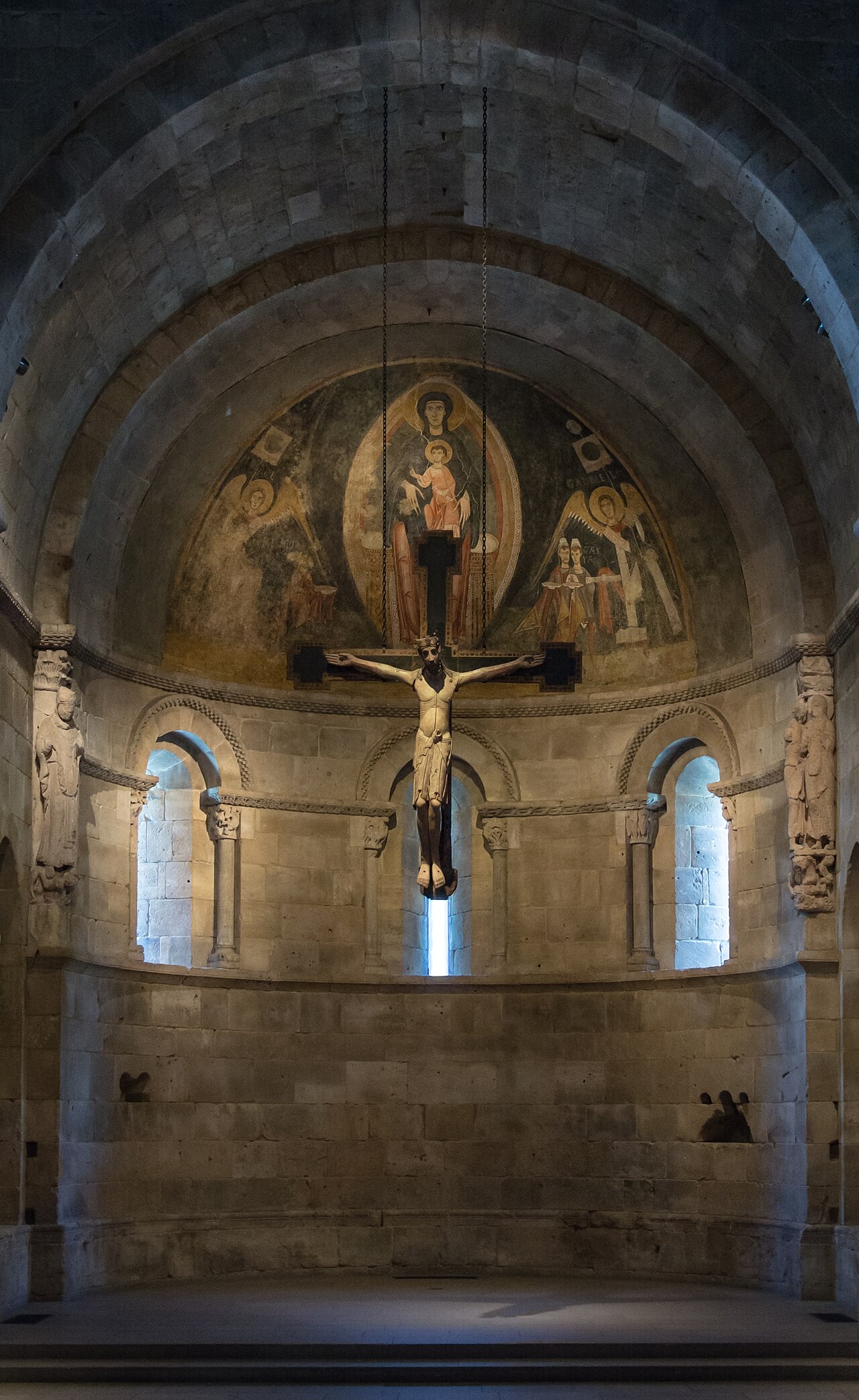
A museum loan usually suggests a painting or a small object in a crate. The Fuentidueña apse required nearly 3,300 numbered stone pieces. The rounded end of a twelfth-century Spanish church was dismantled and sent to New York under an exchange-loan agreement.
Reassembly at the Met Cloisters began in 1958 and finished in 1961. The structure came from the church of San Martín in Fuentidueña, where its thick walls, rounded arches and carved details belonged to a Romanesque religious building. Moving it required both construction expertise and elaborate negotiations.
The room visitors encounter today also needs a careful explanation. The fresco in the half-dome and the large wooden crucifix came from other Spanish sites; they were not originally part of this apse. It is a genuine medieval structure presented within a museum arrangement. Recognizing that combination makes the space more interesting, because it reveals how architectural preservation and curatorial interpretation can work together.







Add Comment