
Mystery 3 of 15
3. What Does the Voynich Manuscript Say?
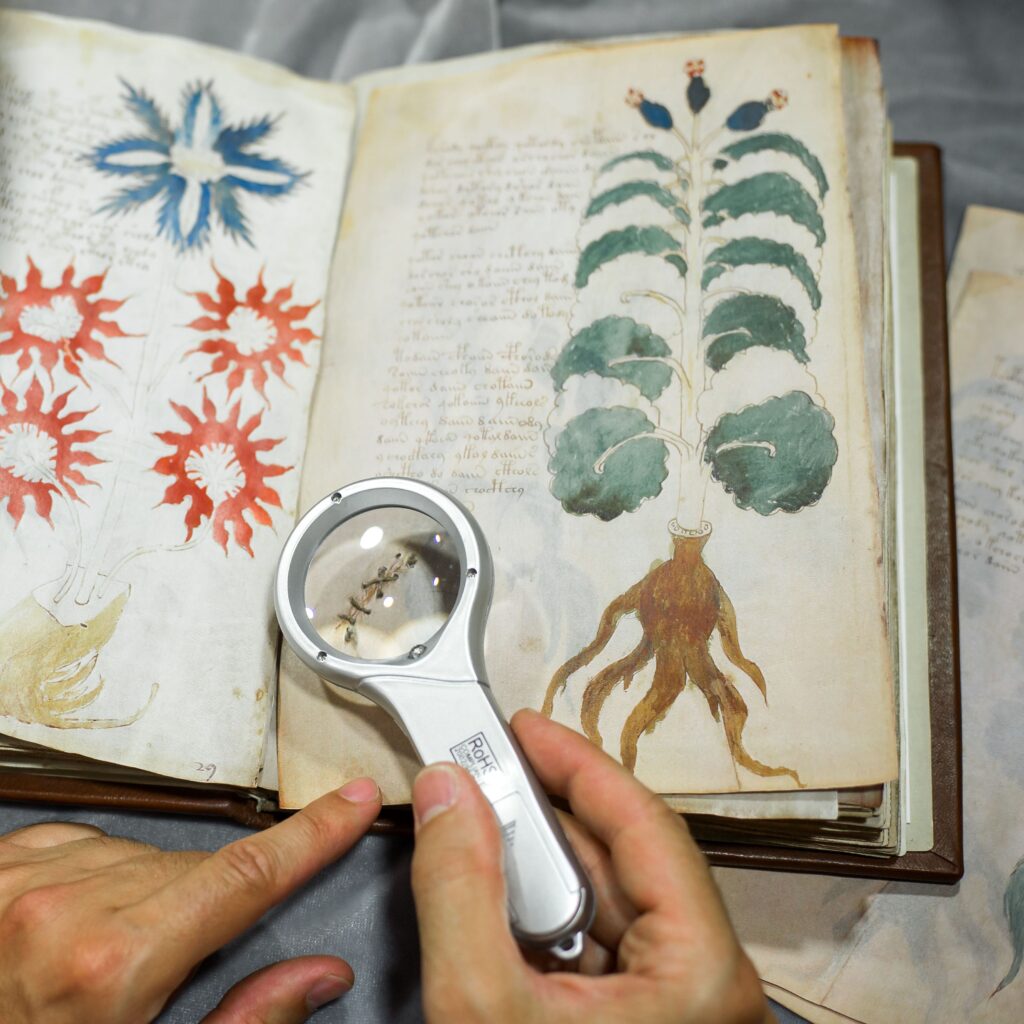
The Voynich Manuscript looks exactly like the sort of object that should have appeared in a mystery novel.
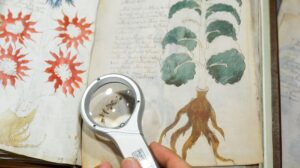
Its pages are filled with elaborate illustrations of unfamiliar plants, astronomical diagrams, strange containers, human figures, and hundreds of pages of writing in a script that nobody has convincingly deciphered.
Modern radiocarbon testing dated the parchment to the early 15th century, roughly between 1404 and 1438. That makes the book a genuine medieval object rather than an elaborate modern hoax.
What it actually says is another matter.
Cryptographers, historians, linguists, computer scientists, and enthusiastic amateurs have proposed countless solutions. The text has been described as everything from an encrypted medical manual to a lost language, an artificial language, a sophisticated shorthand system, or an extremely elaborate piece of nonsense.
The writing has statistical patterns that make it look surprisingly language-like, yet no proposed translation has gained broad scholarly acceptance.
Why It Is Still a Mystery
There is no known key, no confirmed author, and no second document written in the same script. Without something comparable to the Rosetta Stone, even an apparently convincing translation is difficult to prove. After roughly six centuries, we still cannot say with confidence what the book’s original owner was reading.



Add Comment